
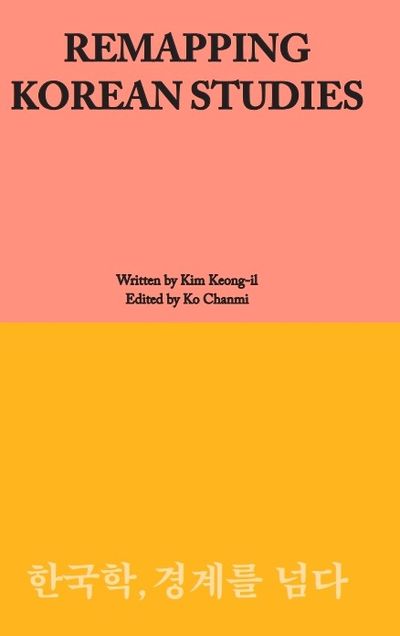
Remapping Korean Studies
10%
10,800원
12,000원
- 통합포인트
- 600P(5% 적립)5만원 이상 구매 시 2천원 추가 적립
- 결제혜택
- 카드/간편결제 혜택을 확인해 보세요!
- 해외배송 가능
- 문화비소득공제 신청 가능
기본정보
| ISBN | 9791158668624 |
|---|---|
| 발행(출시)일자 | 2025년 12월 15일 |
| 쪽수/크기 | 124쪽 | 120 * 185 * 14 mm / 283 g |
| 시리즈명 | Re-Born Korea |
책 소개
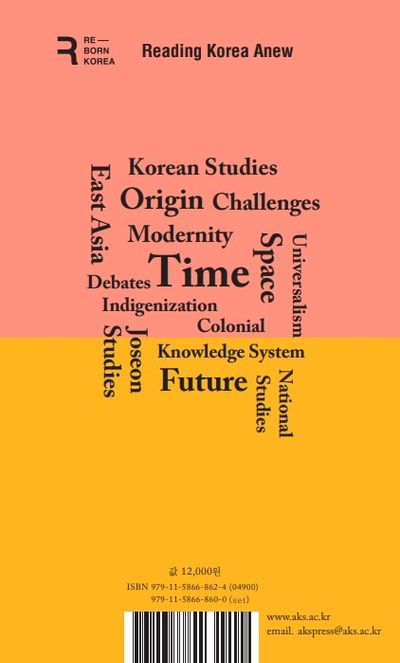
Re-Born Korea is a series that reintroduces significant works from the Academy of Korean Studies to a global readership, bringing influential scholarship into conversation with contemporary questions. This inaugural volume begins with a timely yet enduring question: Why Korean Studies, and why now?
Although Korean Studies is commonly understood as the study of Korea, its origins were anything but straightforward. Emerging at the intersection of colonial systems of knowledge and efforts to reclaim Korean history and identity, the field evolved through continuing debates over universalism and particularism, tradition and modernity, and nationalism and global perspectives.
Remapping Korean Studies traces the formation and development of Korean Studies from the modern transition through the colonial and post-liberation periods, showing how the field has responded to changing historical and intellectual contexts. Rather than presenting Korean Studies as the search for a fixed idea of “Koreanness,” the book reveals it as an evolving body of scholarship shaped by historical experience, critical inquiry, and exchanges across intellectual and national boundaries.
Offering a thoughtful and accessible introduction to the origins, major debates, and future directions of Korean Studies, this volume will serve as an invaluable guide for students, scholars, libraries, and anyone seeking a deeper understanding of Korea and the field devoted to its study.
Also available in Korean as Hangukhak gyeonggye reul neomda 한국학, 경계를 넘다.
Although Korean Studies is commonly understood as the study of Korea, its origins were anything but straightforward. Emerging at the intersection of colonial systems of knowledge and efforts to reclaim Korean history and identity, the field evolved through continuing debates over universalism and particularism, tradition and modernity, and nationalism and global perspectives.
Remapping Korean Studies traces the formation and development of Korean Studies from the modern transition through the colonial and post-liberation periods, showing how the field has responded to changing historical and intellectual contexts. Rather than presenting Korean Studies as the search for a fixed idea of “Koreanness,” the book reveals it as an evolving body of scholarship shaped by historical experience, critical inquiry, and exchanges across intellectual and national boundaries.
Offering a thoughtful and accessible introduction to the origins, major debates, and future directions of Korean Studies, this volume will serve as an invaluable guide for students, scholars, libraries, and anyone seeking a deeper understanding of Korea and the field devoted to its study.
Also available in Korean as Hangukhak gyeonggye reul neomda 한국학, 경계를 넘다.